
The sulfate-free movement has transformed how we think about body care. Once limited to specialty stores, sulfate-free shower gels now occupy significant shelf space in every beauty aisle. But is the hype justified?
If you’ve ever stepped out of the shower with tight, dry, or irritated skin, sulfates might be the culprit. These powerful cleansing agents create satisfying lather but often at the expense of your skin’s health and comfort.
This guide explains exactly what sulfates do to your skin, why going sulfate-free benefits many people, and which products deliver the best results in 2026. Whether you have dry skin, sensitive skin, or simply want gentler cleansing, we’ve got your solution.
What Are Sulfates and Why Are They in Shower Gels?
Understanding sulfates helps you make informed decisions about your body care products.
Understanding SLS, SLES, and Other Sulfates
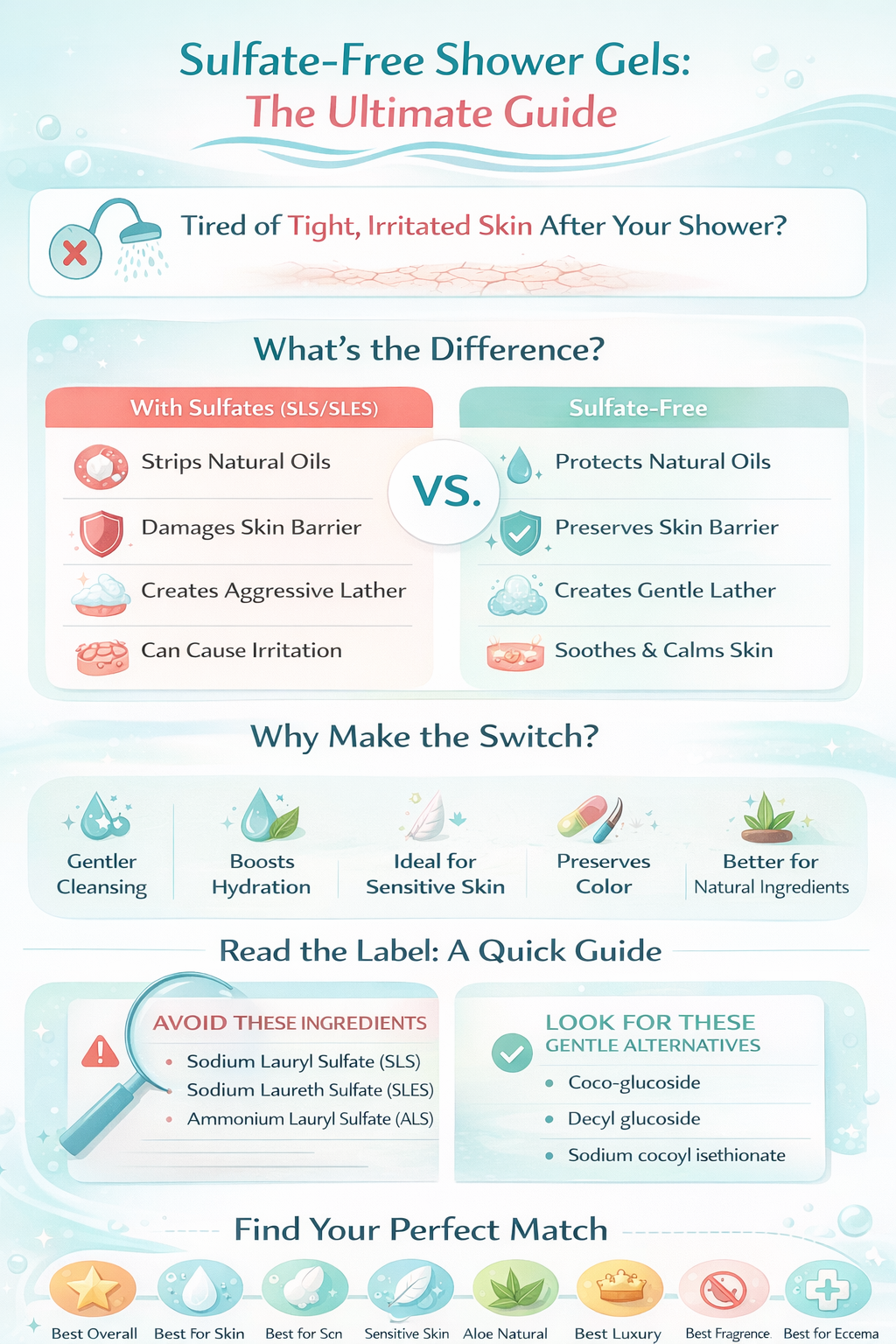
Sulfates are surfactants cleansing agents that create foam and remove dirt and oil from skin. The two most common types in shower gels are:
- Sodium Lauryl Sulfate (SLS)
- Sodium Laureth Sulfate (SLES)
Manufacturers love sulfates for several reasons. They’re inexpensive, highly effective at cleansing, and produce the rich, luxurious lather consumers associate with cleanliness. That satisfying foam you get from most shower gels? Sulfates are responsible.
Other sulfate variations include Ammonium Lauryl Sulfate and Sodium Coco-Sulfate. While some are gentler than others, they all share similar cleansing mechanisms that can be problematic for certain skin types.
How Sulfates Affect Your Skin
Sulfates work by breaking down oils including your skin’s natural protective oils. While this effectively removes dirt and impurities, it also strips away the lipid barrier that keeps your skin healthy and hydrated.
Your skin barrier, the stratum corneum, relies on natural oils to function properly. When sulfates remove these oils repeatedly through daily showering, the barrier becomes compromised. This leads to increased transepidermal water loss (TEWL), meaning moisture escapes from your skin faster than it should.
The result? Dryness, tightness, irritation, and increased sensitivity over time. Some people tolerate sulfates well, but many experience cumulative damage they don’t recognize. Understanding these mechanics is crucial when you are trying to choose the best shower gel for your specific skin type, as avoiding these harsh agents is the first step toward better skin health.
Top Benefits of Sulfate-Free Shower Gels
Switching to sulfate-free formulas offers multiple advantages for skin health and comfort.
Gentler Cleansing Without Stripping Natural Oils
Sulfate-free shower gels use alternative surfactants that cleanse effectively without aggressive oil removal. Ingredients like coco-glucoside and decyl glucoside lift away dirt and impurities while leaving your skin’s protective layer intact.
The key difference is selectivity. Sulfate-free surfactants remove what needs removing dirt, sweat, excess oil without stripping the beneficial oils your skin needs for protection and moisture retention.
Note: Don’t be concerned about reduced lather. Less foam doesn’t mean less cleanliness. Your skin comes out just as clean, but significantly more comfortable.
Better for Dry and Dehydrated Skin
Dry skin suffers most from sulfate exposure. Already lacking sufficient natural oils, dry skin becomes even more compromised when sulfates strip away what little protection exists.
Sulfate-free formulas preserve moisture during cleansing rather than depleting it. However, while cutting sulfates is a great start, the best moisturizing shower gels for dry skin often go a step further by combining sulfate-free bases with rich emollients like glycerin and hyaluronic acid to lock in hydration while you wash. The difference is often immediately noticeable; that tight, uncomfortable feeling after showering typically disappears.
Ideal for Sensitive Skin and Eczema
Dermatologists frequently recommend sulfate-free cleansers for patients with sensitive skin, eczema, and other inflammatory conditions. The reasoning is straightforward sulfates can trigger irritation and worsen existing skin issues.
For eczema-prone skin, maintaining barrier integrity is crucial. Sulfates compromise this barrier, potentially triggering flare-ups and prolonging healing. For those managing chronic conditions, simply removing sulfates might not be enough; using specific shower gels for sensitive skin and eczema relief ensures that every ingredient is curated to calm inflammation and support the skin’s natural repair process.
Preserves Hair and Skin Color Treatments
Sulfates fade color treatments faster than gentler alternatives. If you’ve invested in hair color, spray tan, or other cosmetic treatments, sulfate-free products help protect that investment. Color molecules bond to hair and skin surfaces; sulfates’ aggressive cleansing action breaks these bonds more quickly, leading to faster fading and more frequent touch-ups.
More Compatible with Natural Ingredients
Sulfate-free formulations pair exceptionally well with botanical ingredients. Without harsh sulfates dominating the formula, natural moisturizers and soothing extracts can work more effectively.
Ingredients like aloe vera, chamomile, and plant oils deliver enhanced benefits in sulfate-free bases. The gentle cleansing action doesn’t counteract the soothing and hydrating properties of these botanicals.
Who Should Use Sulfate-Free Shower Gels?
While almost anyone can benefit, certain groups see the most dramatic improvements.
Dry Skin Types
If your skin consistently feels tight after showering, looks dull or flaky, or absorbs moisturizer immediately without lasting relief, sulfates are likely contributing to your problems. Dry skin lacks sufficient natural oil production, and sulfates worsen this deficiency. Switching often produces noticeable improvement within days.
Sensitive and Eczema-Prone Skin
Reactive skin responds to irritants with redness, itching, burning, or rashes. Sulfates rank among the most common cleansing-related irritants, making sulfate-free formulas essential for sensitive skin management. Eczema requires particularly gentle care, and harsh cleansers can trigger flares that take weeks to resolve.
Anyone Seeking Gentler Cleansing
Even those without specific skin conditions benefit from gentler cleansing. Think of sulfate-free as preventive care protecting healthy skin from potential future damage. Those transitioning to cleaner beauty routines often start with sulfate-free body care; it’s an easy switch that delivers noticeable benefits without dramatic lifestyle changes.
8 Best Sulfate-Free Shower Gels for 2026
Our curated selection addresses various needs, preferences, and budgets.
1. Best Overall Sulfate-Free Shower Gel
The ideal everyday option balances effective cleansing with universal gentleness. Look for formulas featuring coco-glucoside as the primary surfactant, combined with glycerin and soothing botanical extracts. These products work for most skin types and deliver pleasant sensory experiences without harsh chemicals. Dermatologist-tested formulations with pH-balanced properties earn top marks for daily, whole-family use.
2. Best Sulfate-Free Shower Gel for Dry Skin
Dry skin needs sulfate-free formulas that add moisture while cleansing. Products combining decyl glucoside with hyaluronic acid, shea butter, and natural oils deliver this dual action effectively. Cream-based textures provide maximum moisture, leaving skin soft rather than tight after rinsing.
3. Best Sulfate-Free Shower Gel for Sensitive Skin
Hypoallergenic formulations with minimal ingredient lists work best for reactive skin. Look for gentle surfactants combined with allantoin and chamomile, without any added fragrance. Dermatologist-tested and clinically proven options provide extra confidence for those with sensitivity concerns.
4. Best Natural Sulfate-Free Shower Gel with Aloe Vera
Natural formulations featuring aloe vera as a hero ingredient combine sulfate-free cleansing with soothing botanical benefits. Coconut-derived surfactants pair perfectly with the hydrating and calming properties found in aloe vera in natural shower gels, making these certified organic options a staple for clean beauty enthusiasts seeking effective alternatives.
5. Best Budget-Friendly Sulfate-Free Shower Gel
Gentle cleansing doesn’t require premium pricing. Drugstore options featuring coco-glucoside, glycerin, and vitamin E deliver meaningful benefits at accessible price points. These widely available products prove that sulfate-free has become mainstream and affordable for everyone.
6. Best Luxury Sulfate-Free Shower Gel
Premium formulations featuring rare botanical oils and sophisticated surfactant blends create spa-like experiences at home. Natural essential oil fragrances add sensory pleasure without synthetic irritants. These are investment products for those prioritizing elevated self-care rituals with uncompromising gentleness.
7. Best Fragrance-Free Sulfate-Free Shower Gel
Combining zero sulfates with zero fragrance provides ultimate gentleness for highly reactive or allergy-prone skin. Since fragrances are a top allergen, combining a fragrance-free formula with sulfate-free cleansing is often the gold standard recommended in our sensitive skin and eczema shower gel guide for patients with multiple sensitivities.
8. Best Sulfate-Free Shower Gel for Eczema
Eczema-specific formulations feature colloidal oatmeal (FDA-recognized skin protectant), ceramides for barrier repair, and niacinamide for inflammation reduction. Products carrying the National Eczema Association Seal of Acceptance meet rigorous standards for eczema-prone skin. These therapeutic-level options support skin healing while providing necessary daily cleansing.
How to Identify Truly Sulfate-Free Products
Marketing claims don’t always match ingredient reality. Learn to verify products yourself.
Reading Ingredient Labels Correctly
Check the ingredient list on product packaging not just front-label claims. Look for these sulfate names to avoid:
- Sodium Lauryl Sulfate (SLS)
- Sodium Laureth Sulfate (SLES)
- Ammonium Lauryl Sulfate (ALS)
- Sodium Coco-Sulfate
Tip: If any appear in the first several ingredients, the product is not truly sulfate-free, regardless of marketing claims.
Common Sulfate-Free Alternatives to Look For
These gentle surfactants indicate genuinely sulfate-free formulations:
- Coco-glucoside: Derived from coconut oil and fruit sugars, offering gentle yet effective cleansing.
- Decyl glucoside: Provides mild, plant-based cleaning power.
- Sodium cocoyl isethionate: Extremely gentle often called “baby foam” for its mildness.
- Sodium cocoyl glutamate: Amino acid-based and maintains skin’s natural moisture balance.
Seeing these ingredients confirms you’ve found a truly sulfate-free product.
Conclusion
Sulfate-free shower gels offer gentler cleansing that protects rather than compromises your skin barrier. The benefits are clear: preserved natural oils, reduced irritation, better moisture retention, and enhanced compatibility with sensitive and problem-prone skin.
Whether you have dry skin, eczema, general sensitivity, or simply want preventive care for healthy skin, sulfate-free formulas deliver meaningful advantages. With options available at every price point, there’s no barrier to making the switch.
Remember to verify claims by reading ingredient labels. Look for gentle surfactants like coco-glucoside and avoid hidden sulfates regardless of front-label marketing.
Make the Switch to Smarter, Sulfate-Free Cleansing
If you’re ready to stop stripping your skin and start protecting it, switching to a sulfate-free shower gel is one of the simplest upgrades you can make. Gentle surfactants, barrier-supporting ingredients, and skin-soothing botanicals help cleanse effectively without leaving your skin tight or irritated. Over time, this small change can lead to softer, calmer, and healthier-looking skin.
Explore The sulfate-free shower gels at We Connect Beauty and choose a formula designed for comfort and care.
Frequently Asked Questions
Is sulfate-free shower gel better for your skin?
For dry, sensitive, and eczema-prone skin, sulfate-free is generally better. It reduces irritation risk and preserves natural moisture. Those with normal, resilient skin may not notice dramatic differences, but sulfate-free still offers gentler cleansing without downsides.
Does sulfate-free shower gel lather?
Yes, sulfate-free products do lather, though typically less than sulfate formulas. Alternative surfactants create sufficient foam for effective cleansing. Less lather doesn’t mean less cleaning power your skin comes out equally clean but more comfortable.
Why is sulfate-free more expensive?
Gentle surfactants cost more to produce than SLS and SLES. Sulfate-free products also often contain higher-quality moisturizing ingredients. However, budget options have become increasingly available as demand has grown.
Can sulfate-free shower gel clean effectively?
Absolutely. Alternative surfactants remove dirt, oil, sweat, and impurities just as effectively as sulfates. Dermatologists confirm equivalent cleansing power with reduced irritation potential. You’re not sacrificing cleanliness for gentleness.
How long does it take to see benefits from sulfate-free?
Many people notice immediate reduction in post-shower tightness after their first use. Full skin barrier recovery may take two to four weeks of consistent use. Those with significant barrier damage from long-term sulfate use see progressive improvement over time.