
If you have ever stepped out of the shower feeling itchier than when you went in, you know the struggle of sensitive skin. For the millions of people dealing with eczema (atopic dermatitis) or reactive skin, the daily ritual of showering can feel less like a refresh and more like a risk. The tightness, the redness, and the immediate urge to scratch are signs that your skin barrier is crying out for help.
In 2026, the approach to body care has shifted from simple “cleansing” to “barrier repair.” The best shower gel isn’t just about removing dirt; it is the first and most critical step in your skincare routine. Using the wrong product can strip your natural oils, turning a mild flare-up into a week-long battle. Conversely, the right formula can soothe inflammation, replenish lost lipids, and restore comfort before you even reach for your towel.
While there are countless options on the shelves, specific skin conditions require specialized care. For a broader understanding of how to navigate the aisle, you can check out our Choosing the Best Shower Gel. However, if your skin demands gentle, hypoallergenic care, general advice isn’t enough.
In this comprehensive guide, we will explore the science of sensitive skin, identify the ingredients that heal versus those that harm, and review the top shower gels for sensitive skin and eczema relief in 2026.
Understanding Sensitive Skin and Eczema: Why Your Shower Gel Matters
To choose the right product, you must first understand the biology of your skin. Eczema and chronic sensitivity are fundamentally problems of the skin barrier.
The Compromised Barrier
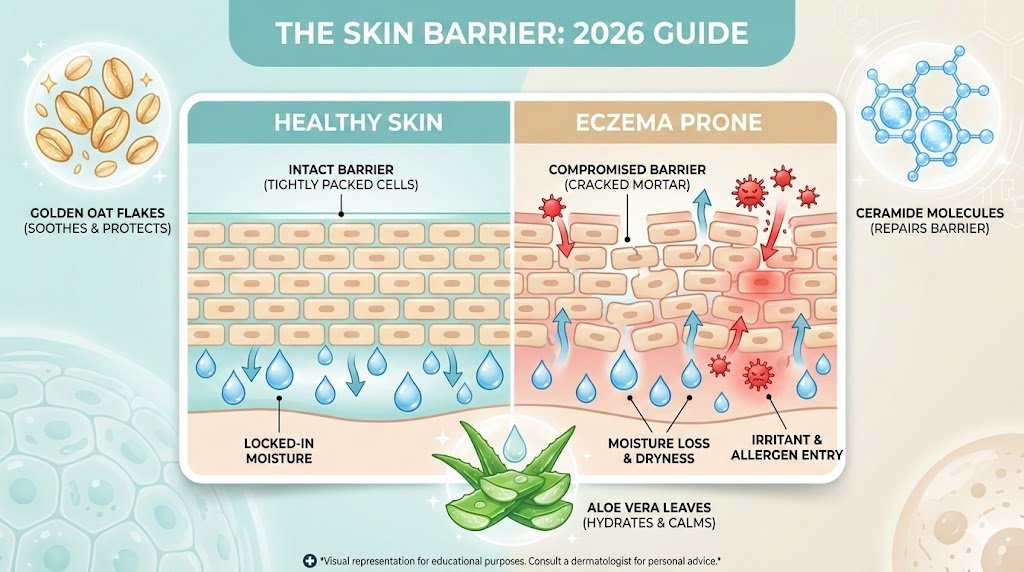
Think of your skin like a brick wall. The skin cells are the bricks, and the natural fats (lipids) are the mortar holding them together. In healthy skin, this wall keeps moisture in and irritants out. In eczema-prone skin, the “mortar” is depleted. This allows water to escape (causing dryness) and bacteria or allergens to enter (causing inflammation).
The pH Factor
One of the most overlooked aspects of skincare is pH balance. Healthy skin is slightly acidic, with a pH between 4.5 and 5.5. Traditional bar soaps and harsh shower gels often have an alkaline pH of 9 or 10. When you use these high-pH products, you disrupt the skin’s “acid mantle,” which takes hours to repair itself. For sensitive skin, this disruption is a direct trigger for eczema flare-ups.
The Myth of “Squeaky Clean”
We have been conditioned to believe that “squeaky clean” means healthy. In reality, that squeaky feeling is the sound of your skin being stripped of its protective oils. For eczema relief in 2026, the goal is a “moisturized clean” where the skin feels soft and pliable immediately after rinsing.
Ingredients to Watch: The Good, The Bad, and The Healing
The difference between a flare-up and relief often comes down to the ingredient label. Here is how to decode it using Semantic Analysis of ingredients.
The “No-Go” List: Why Sulfates Are the Enemy
If you see Sodium Lauryl Sulfate (SLS) or Sodium Laureth Sulfate (SLES) on a bottle, put it back. These are surfactants detergents that create foam and cut through grease. While effective for cleaning dishes, they are too aggressive for sensitive skin. They strip away the essential lipids your skin barrier desperately needs to retain.
Switching to sulfate-free cleansers is often the single most effective change you can make. To understand exactly why sulfates trigger flare-ups and to see more options, read our guide on Sulfate-Free Shower Gels: Top Benefits and 8 Best Picks for 2026.
Hydration Heroes: Ceramides, Glycerin, and Colloidal Oatmeal
When repairing the barrier, look for humectants and emollients.
- Colloidal Oatmeal: The gold standard for eczema. It contains avenanthramides, unique compounds that reduce itching and inflammation.
- Ceramides: These are lipid molecules that mimic the skin’s natural barrier, effectively filling in the cracks in the “brick wall.”
- Glycerin: A powerful humectant that pulls moisture from the air into the skin.
It is important to note that sensitive skin is almost always dry, but not all dry skin is sensitive. If your primary concern is flakiness alongside sensitivity, you may want to explore our list of 10 Best Moisturizing Shower Gels for Dry Skin in 2026.
Nature’s Soother: The Role of Aloe Vera
For those who prefer natural remedies, Aloe Vera remains a powerhouse. It is rich in antioxidants, enzymes, and Vitamins A and C, giving it significant anti-inflammatory properties. Unlike some natural ingredients (like essential oils) which can irritate eczema, pure Aloe is generally well-tolerated and offers immediate cooling relief for itchy skin.
Aloe is a powerhouse for calming inflammation. Learn more about how to choose the right natural formulation in our Ultimate Guide to Aloe Vera in Natural Shower Gels: Benefits and Top Picks.
Top 7 Best Shower Gels for Sensitive Skin and Eczema in 2026
Based on formulation analysis, dermatological recommendations, and user reviews, these are the top contenders for 2026.
1. The Dermatologist Favorite: CeraVe Soothing Body Wash
Best For: Restoring the skin barrier. CeraVe continues to dominate the sensitive skin market in 2026 because of its science-first approach. This formula is unique because it contains three essential ceramides (1, 3, 6-II) and hyaluronic acid. It uses a specific Omega oil delivery system to ensure the skin remains hydrated long after you dry off. It holds the National Eczema Association (NEA) Seal of Acceptance.
- Key Ingredients: Ceramides, Hyaluronic Acid, Omega Oils.
- Fragrance: None.
2. The Itch-Relief Specialist: Aveeno Restorative Skin Therapy
Best For: Active eczema flare-ups. When the itch is unbearable, Aveeno is the go-to. This body wash utilizes Prebiotic Oat specifically designed to soothe distressed, dry, and sensitive skin. The antioxidant oat formula helps restore the skin’s pH and supports the microbiome the ecosystem of bacteria that lives on your skin and protects it.
- Key Ingredients: Prebiotic Oat, Aloe, Pro-Vitamin B5.
- Fragrance: Fragrance-Free.
3. The Lipid-Replenisher: Bioderma Atoderm Cleansing Oil
Best For: Extremely dry, uncomfortable skin. Technically a “shower oil,” this product transforms into a milky emulsion upon contact with water. It is designed to offer 24-hour hydration and immediate comfort right from the shower. The Biolipids in the formula stimulate the synthesis of the skin’s own lipids, training your skin to protect itself better over time.
- Key Ingredients: Vitamin B3 (Niacinamide), Biolipids.
- Texture: Silky oil.
4. The Budget-Friendly Gentle Cleanser: Cetaphil Ultra Gentle Body Wash
Best For: Daily use on a budget. Cetaphil proves you don’t need to spend a fortune for clinical-grade care. This wash contains Aloe Vera and Vitamin B5 to soothe while it cleans. It is hypoallergenic and tested by dermatologists to ensure it doesn’t clog pores or irritate sensitive areas. It is an excellent “family” body wash that is safe for everyone.
- Key Ingredients: Aloe Vera, Vitamin B5.
- Fragrance: Fragrance-free option available.
5. The Natural Choice: The Seaweed Bath Co. Unscented Body Wash
Best For: Eco-conscious consumers with sensitivity. Many natural products rely on essential oils that irritate eczema. This unscented version avoids that trap. It uses bladderwrack seaweed, which naturally detoxifies and moisturizes, combined with Kukui oil and Aloe. It bridges the gap between green beauty and clinical efficacy.
- Key Ingredients: Bladderwrack Seaweed, Kukui Oil, Aloe.
- Certifications: Leaping Bunny Certified.
6. The Baby-Safe Option: Eucerin Baby Eczema Relief Cream Body Wash
Best For: Infants and adults with hypersensitive skin. If it is gentle enough for a baby’s flare-up, it is gentle enough for you. This non-foaming formula is enriched with Colloidal Oatmeal and Ceramide-3. It is specifically designed to cleanse without stripping, making it ideal for the most reactive skin types.
- Key Ingredients: Colloidal Oatmeal, Ceramide-3.
- Texture: Low-lather cream.
7. The Luxury Splurge: La Roche-Posay Lipikar Wash AP+
Best For: Severe dryness and roughness. This moisturizing body wash is formulated with Shea Butter, Glycerin, and Niacinamide. It uses La Roche-Posay’s proprietary Prebiotic Thermal Water, which has unique mineral properties known to soothe sensitive skin. It is suitable for babies, children, and adults, tackling the roughness associated with eczema.
- Key Ingredients: Shea Butter, Niacinamide, Thermal Water.
- Fragrance: None.
How to Shower with Eczema: A Routine for Relief
Even the best shower gel in the world won’t help if your shower habits are damaging your skin. Optimizing your routine is just as important as the product you choose.
1. Watch the Temperature
Hot water is a vasodilator it opens up blood vessels, which can increase redness and itching. It also melts away your natural sebum (oils).
- Optimization Tip: Always use lukewarm water. If the mirror is steaming up, the water is too hot for your eczema.
2. The 10-Minute Limit
Prolonged exposure to water can actually dehydrate your skin by disrupting the Natural Moisturizing Factors (NMF).
- Optimization Tip: Keep showers between 5 to 10 minutes.
3. The “Pat Dry” Method
Vigorous rubbing with a towel provides a temporary relief from itching (friction), but it causes micro-tears in the skin barrier, leading to more inflammation later.
- Optimization Tip: Gently pat your skin with a soft towel. Leave the skin slightly damp.
4. The 3-Minute Moisture Rule
This is the “Golden Rule” of dermatology. You have a 3-minute window after stepping out of the shower where your pores are open and the skin is hydrated.
- Optimization Tip: Apply your moisturizer or prescription cream within 3 minutes to “lock in” the water. If you wait until your skin is fully dry, the moisturizer will be far less effective.
Buying Guide: What to Look for on the Label
When shopping for sensitive skin products in 2026, knowing the lingo is essential for making safe choices.
Key Terms to Identify
- Fragrance-Free vs. Unscented: This is a crucial distinction. “Unscented” means the product may contain masking fragrances to hide the smell of chemicals. “Fragrance-Free” means no fragrance ingredients have been added. Always choose Fragrance-Free.
- Hypoallergenic: This means the manufacturer believes the product causes fewer allergic reactions, though it is not a strictly regulated term.
- Soap-Free: Indicates the product is a synthetic detergent (syndet) with a balanced pH, rather than a traditional alkaline soap.
Trusted Certifications
Look for the National Eczema Association (NEA) Seal of Acceptance. This logo indicates that the product has been evaluated by a panel of experts and is proven to be suitable for people with eczema or sensitive skin.
Conclusion
Managing sensitive skin and eczema is a daily commitment, but it starts with the simplest of choices: what you wash with. By eliminating harsh sulfates, avoiding fragrances, and prioritizing barrier-repairing ingredients like ceramides and oats, you can turn your shower from a source of irritation into a ritual of relief.
In 2026, the best products are those that respect your skin’s microbiome and pH balance. Whether you choose a clinical formula like CeraVe or a soothing oat blend from Aveeno, the key is consistency.
Gentle Care That Your Sensitive Skin Can Trust
Living with sensitive or eczema-prone skin means every product matters especially the one you use daily in the shower. A carefully chosen, fragrance-free and sulfate-free shower gel enriched with ceramides, colloidal oatmeal, or aloe vera can help protect your skin barrier, reduce post-shower itching, and support long-term comfort. The right formula doesn’t just cleanse it works to calm, hydrate, and defend your skin with every wash.
Give your skin the relief it deserves with thoughtfully selected, skin-friendly shower gels from We Connect Beauty.
Frequently Asked Questions (FAQs)
Can shower gel cause eczema flare-ups?
Yes. Shower gels containing sulfates (SLS/SLES), synthetic fragrances, parabens, or formaldehyde releasers can strip the skin barrier and trigger an immune response, leading to an immediate eczema flare-up.
Is soap or body wash better for sensitive skin?
Body wash (specifically “soap-free” cleansers) is generally better. Traditional bar soaps have a high pH (alkaline) that disrupts the skin’s acid mantle. Liquid body washes and beauty bars formulated for sensitive skin are usually pH-balanced to match the skin (around 5.5).
How often should I shower if I have eczema?
Most dermatologists recommend showering once a day or every other day. Showering too frequently can dry out the skin. Always follow up immediately with a moisturizer.
Are natural shower gels always safe for sensitive skin?
No. “Natural” does not mean “hypoallergenic.” Many natural shower gels contain essential oils (like lavender, peppermint, or citrus) which are common allergens. If you want a natural option, look for ingredients like Aloe Vera or Colloidal Oatmeal, which are proven soothers.